SnowPod Desktop Metal 3D Printer: What Buyers Should Know
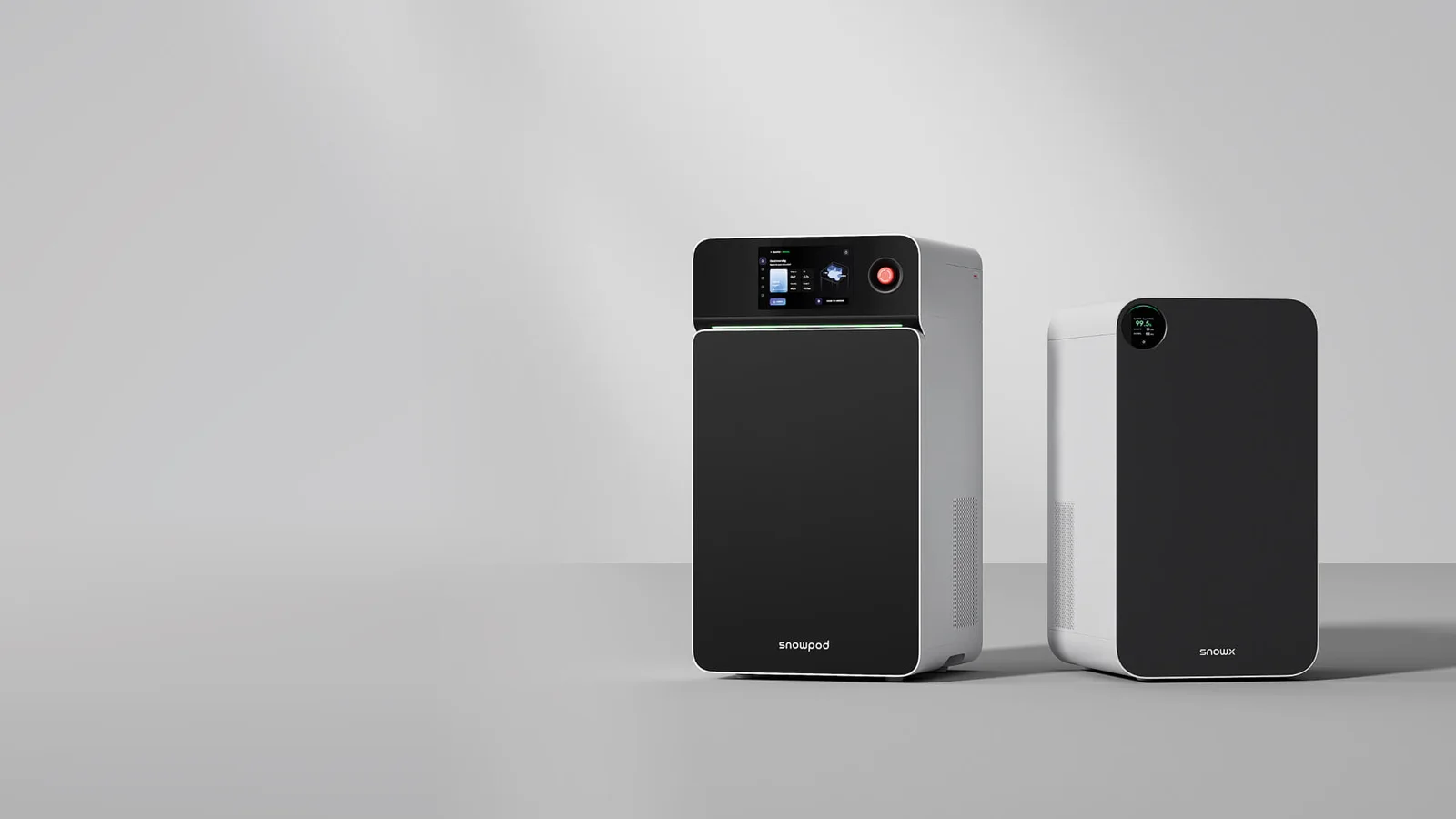
Research-based preview · Sources checked October 22, 2026. This article combines SnowX’s published specifications with 3D Printing Resource Library’s reporting from TCT Shenzhen. Gadgets3DP has not tested SnowPod. Manufacturer specifications and trade-show demonstrations are identified as such below.
SnowPod is trying to make a difficult part of metal 3D printing less difficult: everything around the laser. Sealed powder cartridges, an enclosed transfer box and built-in powder recovery could matter as much to a small workshop as the printer’s headline resolution.
SnowX’s desktop SLM printer now has a published specification sheet and a reported public demonstration. That makes it a product worth following. It does not yet answer the questions that determine whether a metal printer earns its place in a workshop: repeatable part quality, safe maintenance, running costs and reliable delivery.
Here is what is documented, what remains a claim, and what a prospective buyer should check before committing.
Cover image: SnowX promotional product image, not a photograph from Gadgets3DP testing.
What is SnowPod?
SnowPod is a desktop metal printer from SnowX that uses selective laser melting, also described as metal laser powder bed fusion. A fiber laser fuses metal powder into a part, layer by layer. Unlike bound-metal filament printing, this is not an FDM process followed by a separate debinding and sintering workflow.
The current SnowX specification sheet lists an 80 × 80 × 100 mm build volume and 316L stainless steel as the supported material. That points toward small components, jewelry, detailed objects and prototypes. It is not a large-format metal printer, and the material list should not be read as approval to load arbitrary metal powders.
“Desktop” describes the footprint more than the weight: SnowX lists a 360 × 360 × 660 mm enclosure weighing 40 kg. A suitable bench and a clear installation plan are still part of the purchase.
SnowPod specifications: the numbers in context
The figures below are manufacturer-published specifications checked on October 22, 2026. They are not independent test results.
| Item | Published specification | What to check |
|---|---|---|
| Build volume | 80 × 80 × 100 mm | Allow space for supports, orientation and removal. |
| Material | 316L stainless steel | Confirm the approved powder, cartridge price and reuse limits. |
| Laser | One 200 W fiber laser; approximately 40 μm spot | Spot size is not a guarantee of finished-part accuracy. |
| Layer thickness | 30 to 60 μm | Ask which profiles are validated for the parts you need. |
| Machine | 360 × 360 × 660 mm; 40 kg | Check service clearances and the complete system footprint. |
| Software | SnowPath; Windows and macOS | Verify offline use, update policy and available process settings. |
| File formats | STL, STEP, 3MF and SVG listed | Confirm how each format enters the printing workflow. |
| Shielding gas | Nitrogen | Follow the approved material and gas specifications. |
SnowX also advertises 0.05 mm dimensional accuracy, with a qualification that the figure comes from its laboratory and varies with geometry and part size. Before treating that as a design tolerance, ask for measured samples with the alloy, orientation, settings and measurement method documented. A 40 μm laser spot and a 50 μm dimensional claim describe different things.
The most useful idea may be the powder workflow
In its October 16 report from TCT Shenzhen, 3D Printing Resource Library described sealed powder bottles, automatic recovery and sieving, and a transfer box that receives the build plate while limiting open handling. SnowX’s own site presents the same broad approach: enclosed loading, recovery and retrieval.
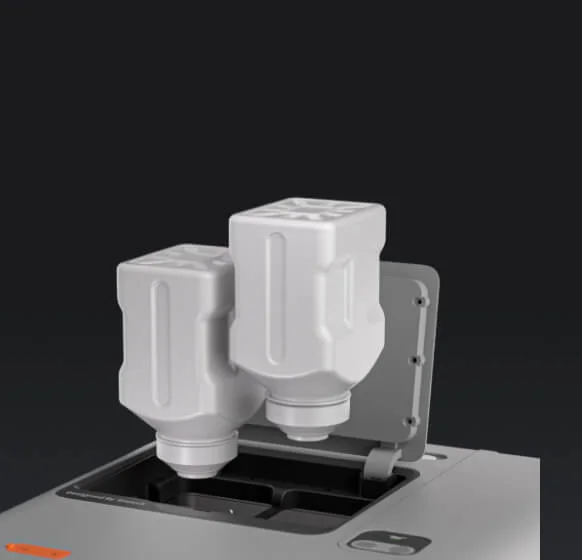
That could reduce the number of manual handling steps. The more revealing questions concern the less photogenic tasks: changing filters, clearing a failed build, maintaining seals and dealing with powder that can no longer be reused. Ask for those procedures, not just a successful print demonstration.
SnowX claims a powder recovery rate above 90% per print. Recovery rate alone does not establish cost per finished part. Failed builds, supports, powder condition and consumable replacement still affect the total.
Breakaway supports are promising, but part geometry matters
The original reporter described removing supports from a demonstration sample with pliers. That observation belongs to the reporter; it is not a Gadgets3DP test. SnowX also promotes supports designed to break away using basic hand tools, while noting that the tools required depend on the part.
If the approach works consistently on production parts, it could reduce dependence on cutting equipment for suitable jobs. It should not be interpreted as a promise that every support can be removed cleanly, or that every printed surface is ready for use.
For a useful demonstration, send a part resembling your actual work. Ask to see the supported print, the removal process and the finished contact surfaces. A simple sample with accessible supports says little about a recessed feature that pliers cannot reach.
SnowPath and NitroPod: evaluate the whole system
SnowPath is listed as included software for importing models, preparing supports, slicing and sending jobs. The appeal is a familiar workflow, but metal printing still involves thermal stress, orientation and process choices. The important question is how well the supplied profiles handle your geometry, not whether the interface resembles an FDM slicer.
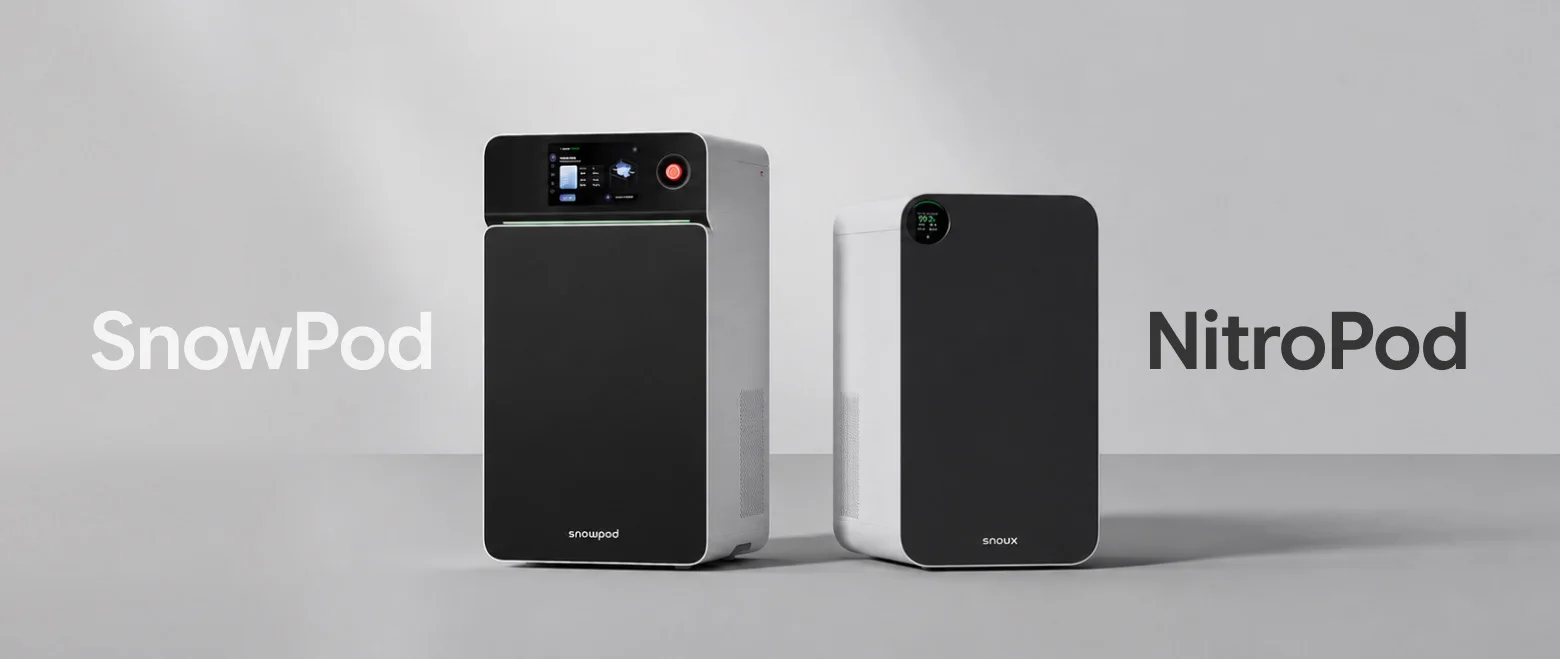
The accompanying NitroPod generator is advertised at 99.9% nitrogen purity at a flow rate of 3 L/min. Those are gas-supply specifications, not a statement that every alloy is compatible or that the chamber always maintains a particular oxygen level. Confirm whether NitroPod is included, which accessories are required, and what the installation and maintenance instructions specify.
Desktop size does not settle the safety question
SnowX lists H13/H14 filtration and PM2.5 monitoring. These are relevant features, but neither a filter rating nor a particle-sensor reading establishes the safety of the complete installation. The manufacturer’s FAQ recommends PPE during normal operation and requires it for maintenance or servicing, according to its instructions.
The TCT report also attributes a practical caution to the company representative: the machine is better suited to a dedicated workspace than a bedroom or living room. That is a more useful starting point than reading “desktop” as permission to operate it anywhere.
OSHA’s combustible-dust guidance explains that some metals can present fire or explosion hazards in finely divided form. It is general background, not a finding about SnowPod. Buyers should obtain the specified powder’s safety data sheet and the manufacturer’s installation, handling and maintenance procedures before choosing a location.
Price, Kickstarter and delivery: what is confirmed?
On the official pages checked for this article, SnowPod was still presented as coming to Kickstarter. SnowX’s FAQ mentioned a planned Q4 VIP deposit offer, but did not provide a fixed retail price on the pages reviewed.
The October 16 trade-show report described a target price in the tens of thousands of Chinese yuan. That is too broad to turn into a meaningful USD starting price. The same report referred to November in a section heading and to a launch before the end of 2026 in its main text, so an exact launch date should not be treated as settled.
Reported first deliveries in summer 2027, with some orders potentially continuing into autumn, are projections rather than shipping guarantees. Check the eventual campaign’s configuration, delivery estimates, taxes, shipping, warranty and cancellation terms. A printer-only price is not the same as the cost of an installed, usable system.
Who should keep SnowPod on their shortlist?
SnowPod is most relevant to small workshops and product-development teams that need compact stainless-steel parts and can accommodate metal-powder procedures. The limited build volume may be acceptable when the parts are small and the value of making them locally is high.
It is less compelling if your main need is large parts, a wider range of alloys or a machine with established delivery and service history. If you only need occasional metal prototypes, compare the complete ownership cost with outsourcing. For general maker projects, our 3D printer buying guides cover more conventional starting points.
The reason to watch SnowPod is its attempt to simplify a complete metal-printing workflow. The reason to wait for more evidence is equally straightforward: an attractive specification sheet and a convincing trade-show sample do not yet demonstrate repeatability, long-term upkeep or delivered value.
Sources and editorial approach
- 3D Printing Resource Library: SnowPod demonstration report, published October 16, 2026. Source for the reported TCT Shenzhen observations and tentative commercial timeline.
- SnowX: official SnowPod specifications and FAQ, checked October 22, 2026. Source for manufacturer claims, supported material, software, gas equipment and promotional images.
- OSHA: Combustible Dust, An Explosion Hazard, checked October 22, 2026. General safety context only.
This is an original English product analysis, not a firsthand review or a translation of the source article. Gadgets3DP has not verified part accuracy, emissions, powder recovery or delivery performance. Images are credited to SnowX and are manufacturer promotional material.